Plant Care Guides / Indoor
The calathea has some of the most beautiful leaves you can bring indoors. It belongs to the prayer plant family, and many calatheas fold their leaves gently upward at night, then open them again by day, so the plant almost seems to move with the light. The bold markings come in stripes, brushstrokes and feathered patterns, which is why it is such a favourite for a bright spot inside.
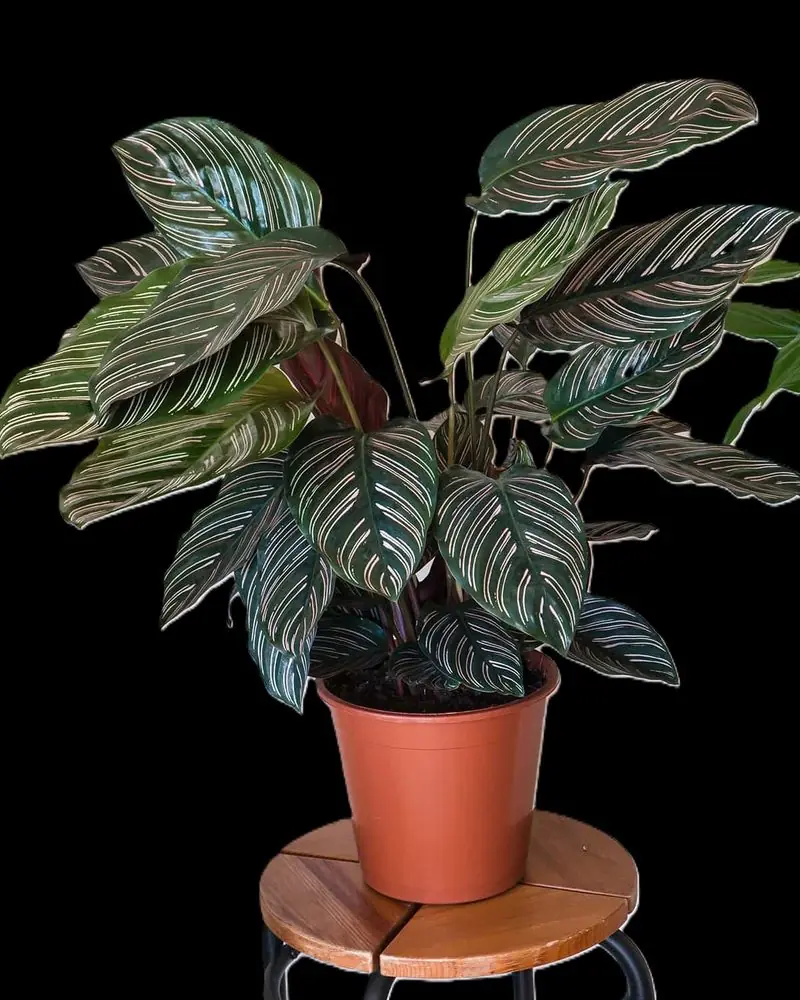
Calatheas are pet-friendly, so they are a safe choice for homes with cats and dogs. One small thing makes a real difference: if your tap water is heavily chlorinated, the leaf edges can brown. Watering with filtered or rainwater, or letting tap water stand overnight, keeps the foliage looking its best.
Medium to bright, indirect light, and never direct sun, which fades the markings and scorches the leaves. Calatheas also cope with a slightly shadier spot than most patterned plants, so they suit a room that does not get strong light.
Keep the soil lightly moist through the warmer months, but never wet or left standing in a saucer, as calatheas are prone to root rot. In winter, let the top two to three centimetres dry out before watering again. Humidity is the real secret with this plant. Our coastal air helps, but if you run heaters in winter, or the leaf tips go dry and crispy, group it with other plants or stand the pot on a tray of damp pebbles.
Feed lightly, about once a month through summer, with a balanced fertiliser at half strength. Calatheas are easily over-fed, and too much shows up as brown marks or burnt leaf edges, so go gently.
Calatheas like a little room and do not enjoy being pot-bound, so move them up a pot size every couple of years in spring. Use a free-draining mix that still holds some moisture; a good potting soil opened up with a handful of perlite or fine bark works well.
Ask about availability. We keep a changing range of indoor plants. WhatsApp us to see what is in store, or pop in and we will help you choose.